- Home Style Daily
- Pretty Organizing
- Garage ideas that give every tool a spot on the wall
Garage ideas that give every tool a spot on the wall
Smart garage ideas turn a messy space into a clean storage wall step by step using sturdy rails, simple shelves and neatly labeled bins.
Ideas from Vaughn Trimble
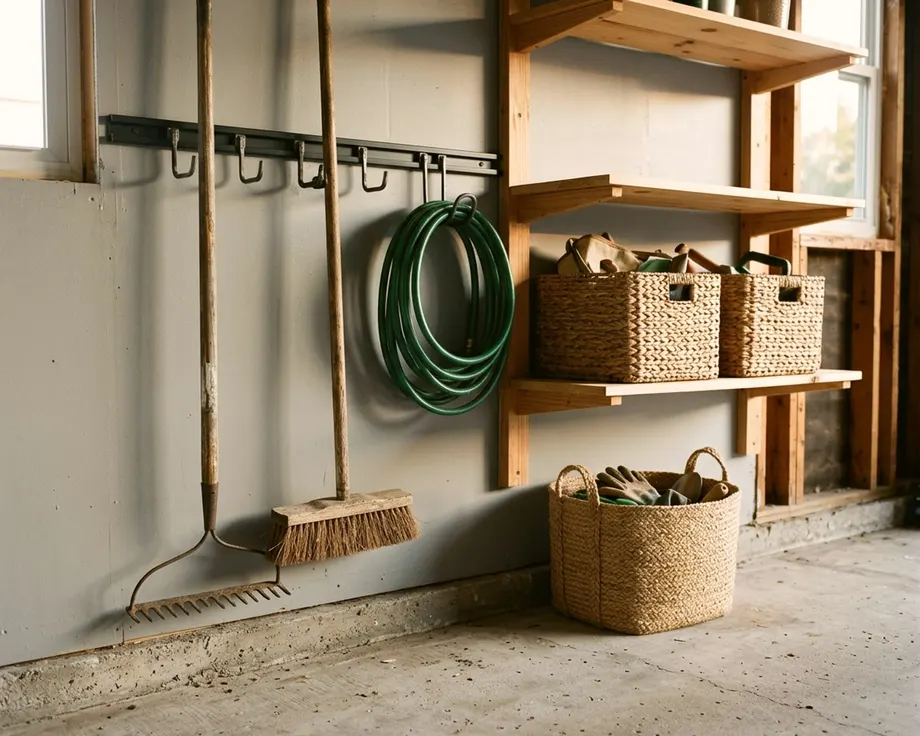
A messy garage turns into a tidy room when every tool and box claims a spot on the wall. Heavy rails and deep shelves lift your gear off the floor to create clean lines and clear paths. This project brings order to the space without requiring major construction.
Empty the space and sort the pile
Pull everything out of the garage to see what you actually own. An empty garage shows you the blank walls. The driveway makes a perfect staging area for a deep sort. Group your belongings into piles to keep, move or toss.
Broken tools go in the trash, and many local recycling centers take old electronics. Check local rules for dried paint. Good items you no longer need belong at a thrift store.
Cardboard boxes can invite pests and hold dampness. Break down empty boxes and recycle them immediately.
Hazardous materials need special care, so old motor oil and mystery liquids require proper disposal. Check your local government website for a household hazardous waste drop location. Getting rid of dangerous chemicals makes the garage safer.
Items you plan to keep fall into broad categories. Garden tools go in a distinct pile. Holiday decorations form another group. Camping gear and sports equipment get their own sections.
Paint supplies and spare hardware sit together. This sorting step saves hours of moving things around later.
Take a push broom to the empty floor. Sweep away the cobwebs from the corners. Wash the concrete with a degreaser, following the label and keeping the door open for fresh air.
A clean garage gives your storage plan a fresh start. Look at the bare drywall for any water damage. Soft spots or dark stains require attention before you hang heavy gear over them.
Fix any small holes with a simple patching compound.
Clear the floor with smart garage wall ideas
Empty floors make a garage feel huge. The walls offer massive storage potential that most people ignore. Stacked boxes on the concrete can invite pests and dampness. High shelves and sturdy tracks solve these common problems.
Examine the bare walls to plan your layout. Good home organization relies on placing frequent items at eye level. Rare items go up high.
Heavy bags of soil stay low. Map out where your rails and shelves will go.
A roll of painter tape helps visualize the design. Tape off a large rectangle where the shelves will sit. Mark a long line for the tool track. Park your car inside the garage to test the clearances.
Open the car doors fully. Ensure no taped area blocks the doors or the walkway.
Gather these tools before you begin:
- A reliable stud finder to locate the wooden frame behind the drywall
- A long bubble level to keep every track and shelf straight
- Painter tape to mark the layout directly on the wall
- A cordless drill with a set of screwdriver bits
- Heavy lag screws to hold brackets firmly in the wood
Find the wall studs using a simple finder tool. Mark each stud with a pencil to help heavy shelves stay secure. Fasten everything directly into the wood.
The drywall alone may tear under the weight of a loaded bin. Use the screws the bracket maker specifies for large brackets. A socket wrench drives them tight into the wall studs.
Hang a rail system for yard tools
Long handles create awkward piles in a corner. A steel rail system holds them flat against the drywall. Heavy tracks screw directly into the studs. Attach specialized hooks to these rails for instant storage.
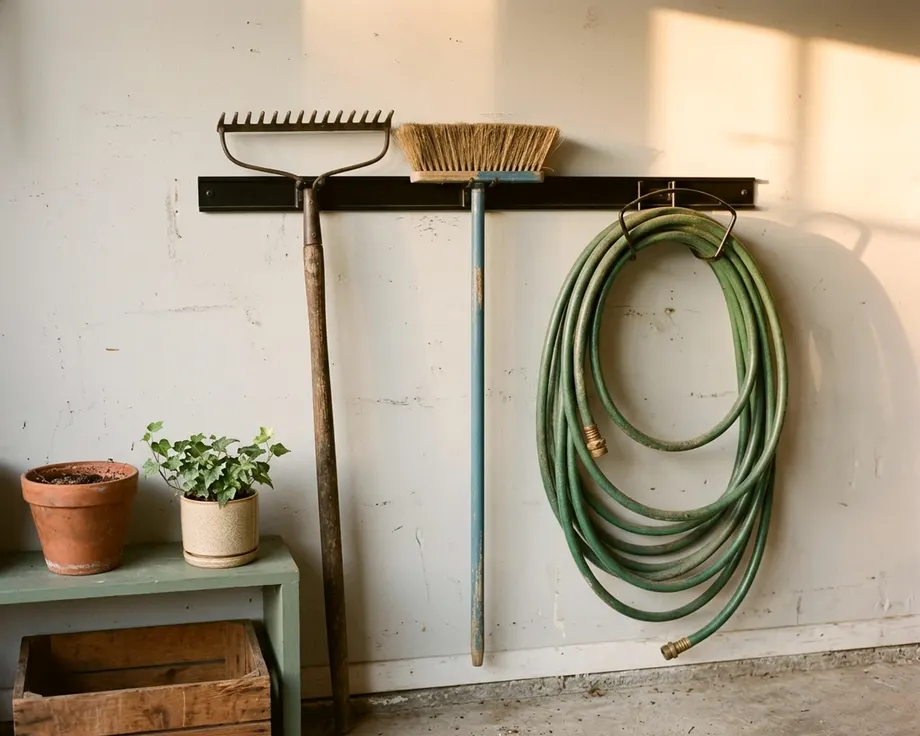
Start by cutting your steel track to size. A hacksaw can cut the metal track, so wear gloves and eye protection. File the cut edges smooth so they will not catch on your hands. Mount the rail horizontally across several wall studs.
Rakes and shovels hang neatly side by side. Brooms and mops sit flush against the paint. A heavy hook supports a leaf blower or a string trimmer.
Rails adapt as your tool collection changes. You simply unclip a hook and slide it down the track.
Place the tool rail near the main garage door. A quick grab saves dirty boots from tracking through the whole house. Short hooks hold hand trowels and pruning shears.
Keep the sharp blades pointed away from the walking path.
Loop your extension cords and garden hoses over deep hooks. A specialized hose hook prevents kinks in the rubber. Wrap the heavy electrical cords tightly. Secure them with a thick strap before hanging them up.
This keeps long cords from tangling in the lawnmower.
Install sturdy shelves and bins for small items
Loose hardware and small parts get lost on open benches. Sturdy wire shelves catch these loose items. Thick metal brackets hold deep shelves securely against the wall.
The open wire design lets dust fall through to the floor. A quick sweep cleans the whole area.
Solid wood shelves work well for paint cans and small bottles. Wood prevents narrow items from tipping over. Secure a lip along the front edge of a wooden shelf. This small barrier stops round bottles from rolling off.
Group the small hardware parts into sturdy plastic bins. Heavy plastic bins often hold up better in cold snaps and summer heat. Clear bins show you exactly what sits inside, while solid colored bins hide the visual clutter.
Opaque bins need clear labels, so write the contents on a strip of thick tape using a permanent marker.
Pegboards offer a classic solution for small hand tools. A heavy wooden frame holds the pegboard away from the drywall, and this small gap allows the metal hooks to slide in easily. Hang your wrenches and screwdrivers in plain sight.
Draw an outline around each tool with a permanent marker. An empty drawn shape shows you exactly what tool is missing.
Create a dedicated bin for basic plumbing repairs. Toss pipe tape and spare washers inside. Fill another bin with painting supplies like rollers and blue tape. A separate container holds electrical wire and spare outlets.
You can grab the entire bin when a project starts.
A dedicated shelf holds car washing supplies. Sponges and car wax sit in an open caddy. A separate row holds extra paper towels and trash bags. Reserve the lowest shelf for heavy liquids like motor oil or windshield wash.
Lifting heavy jugs gets harder if they sit above your shoulders.
Create specific zones for sports and seasons
Tennis rackets and loose soccer balls need a dedicated home. A specific sports zone keeps kids from digging through sharp yard tools. Wire baskets clip directly onto your wall rails to hold the loose items safely. Helmets and pads sit on a low shelf.
Heavy bicycles hang from wall mounts rated for the bike's weight. A vertical bike hook saves floor space because the front tire hooks securely onto the metal plate. The back tire rests flat against the drywall.
Add a small plastic plate where the bottom tire hits the wall. This keeps black rubber marks off the paint.
Camping gear demands a dry spot. Sleeping bags can mildew on cold concrete floors. Put tents and camp chairs on a high wire shelf. Air circulation helps prevent a musty smell from ruining your gear.
Large coolers take up floor space. An oversized high shelf holds them completely out of the way. Store your camping thermos inside the empty cooler to save room.
Roll sleeping bags tightly and tie them with a canvas strap.
Seasonal decor needs a different approach. Winter shovels hide away during the summer heat. Beach chairs sit untouched through the cold months. Put the off-season items up near the ceiling.
Install deep overhead racks into the ceiling joists following the maker's instructions and weight limit.
Holiday decorations live safely in these high spaces. Pack artificial trees and light strands into matching plastic tubs. Push them out of sight until the correct month arrives. Swap the seasonal items regularly.
The active season gear moves down to the easy reaches.
Maintain a clear walkway to the door
The main path from the car to the house door needs wide clearance. Heavy grocery bags easily catch on loose rake handles. A clear walkway prevents ripped bags and scraped knees when you carry boxes inside.
Measure the swing of your car doors. Leave ample space for a person to exit the vehicle comfortably.
Keep the walls near the entry door completely flat. Bulky shelves belong near the back corners. Flat wall panels hold thin items like extension cords right by the door.
A small basket catches muddy gloves before they enter the kitchen.
A heavy rubber door mat stops dirt from moving inside, and a sturdy boot tray provides a landing spot beneath a row of coat hooks. A simple transition zone traps mud in the garage.
Hang wet raincoats over the boot tray so they drip safely onto the plastic.
Add a bright light near the house door, and ask a licensed electrician if it needs new wiring. Good lighting makes the walkway safe at night. A motion sensor switch turns the light on automatically when you step outside.