- Home Style Daily
- Quick Refreshes
- What to put in an empty living room corner
What to put in an empty living room corner
Find practical living room corner decor ideas to turn a blank space into a useful spot with a cozy reading chair, a tall plant or a bright floor lamp.
Ideas from Tavia Venable
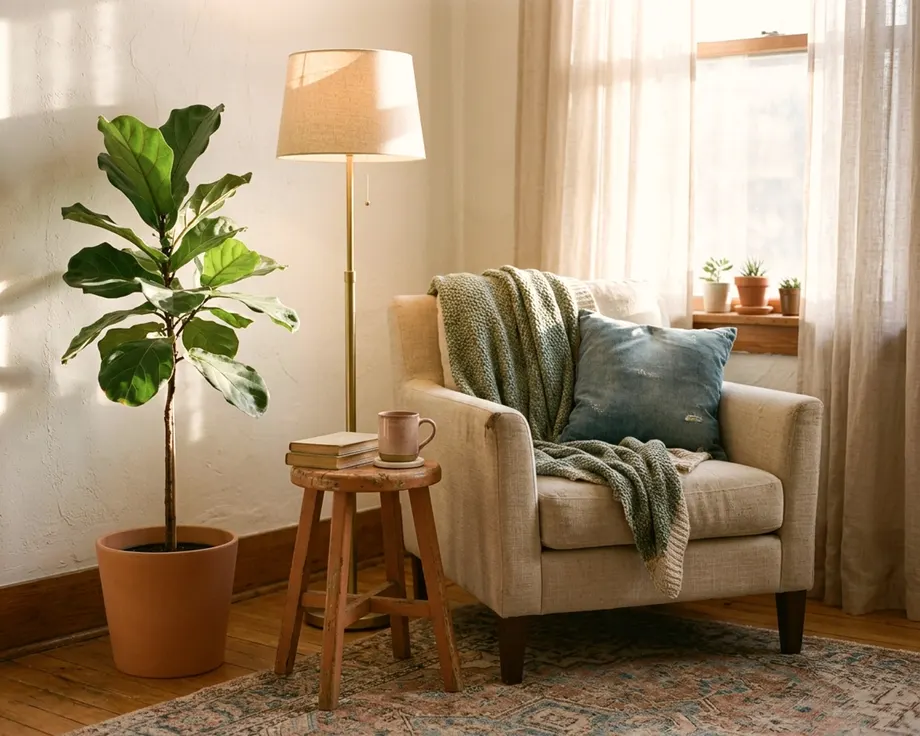
A bare living room corner needs just two or three pieces that work together to look finished. You can fill the empty space in one afternoon using items you likely already own. A comfortable chair, a tall houseplant, a standing lamp or a slim shelf will fix the dead zone.
Decide what the corner should do before you fill it
Look at the physical shape of the empty space before you move heavy furniture across the room. A tight corner behind an inward opening door needs something completely flat against the wall. A wide open corner near a large window gives you room to float a large armchair.
Check the floor and the walls for permanent fixtures that dictate what you can place there:
- Heating vents and cold air returns that need clear air flow.
- Electrical outlets required for reading lamps and wall sconces.
- Window hardware or long curtains that need room to open and close.
- Wall thermostats and light switches that you must reach easily.
Think about the natural traffic path through the living room. You want to walk past the corner without bumping your knee on a hard table edge. Stand in the main doorway, walk toward the sofa and mark the invisible line where your shoulder naturally turns. The decor must sit safely behind that traffic line.
Pick a main function for the space based on its location. A corner near a bookshelf naturally becomes a reading spot. A spot near the front door might serve as a place to drop keys or bags. Choose one clear purpose so the space stays useful and neat.
Try a reading chair with a lamp and a small side table
A comfortable chair anchors an empty corner and creates a clear destination in the room. Bring in an armchair or a soft side chair from another space. Place it slightly away from the walls so the fabric does not rub against the paint.
Choose a chair that fits the scale
The chair must match the proportions of the corner. A massive leather recliner will swallow a small nook and look trapped. A tiny folding chair will look lost in a large room with tall ceilings.
Find a medium armchair with exposed wooden legs. Chairs with visible legs allow light to pass underneath them. This trick makes the floor look continuous and keeps the corner from feeling blocked off. Upholstered chairs with skirts sit heavily on the floor and stop the eye.
Pay attention to the back height. A chair with a low back works well under a window. A tall wingback chair fills the empty wall space in a corner with no windows. The tall back adds a vertical line that draws the eye upward.
Add a practical side table
A flat surface next to the chair gives you a place to rest a coffee cup or a book. A small round table works best in a tight square corner. The curved wooden edges soften the hard right angles of the room walls.
Keep the table small and light. A heavy square trunk will look bulky next to a delicate chair. A simple pedestal table takes up very little floor space. You can easily pull a pedestal table closer when you sit down to read.
Make sure the table sits at the correct height. The tabletop should rest level with the arm of your chair. A table that sits too high feels awkward when you reach for your drink. A table that sits too low forces you to lean over constantly.
Set up a reading lamp
Bring in a standing floor lamp to provide clear reading light. Tuck the heavy lamp base just behind the chair and slightly to the side. The light should fall directly on the pages of your book without shining into your eyes.
An adjustable brass lamp gives you precise control over the light beam. You can bend the metal neck down when you read. You can point the shade toward the wall to create a soft background glow later.
Finish the reading spot with a few soft details. Toss a folded wool blanket over the back of the seat. Add a small linen throw pillow for back support. These cozy home decor ideas make the chair feel like a permanent part of the room.
Use height with a tall plant or a slim shelf
An empty corner often feels bare because the walls stretch upward and leave a blank void. You can fix that empty feeling by drawing the eye up. A large leafy houseplant or a tall narrow shelf immediately brings life to a dead corner.
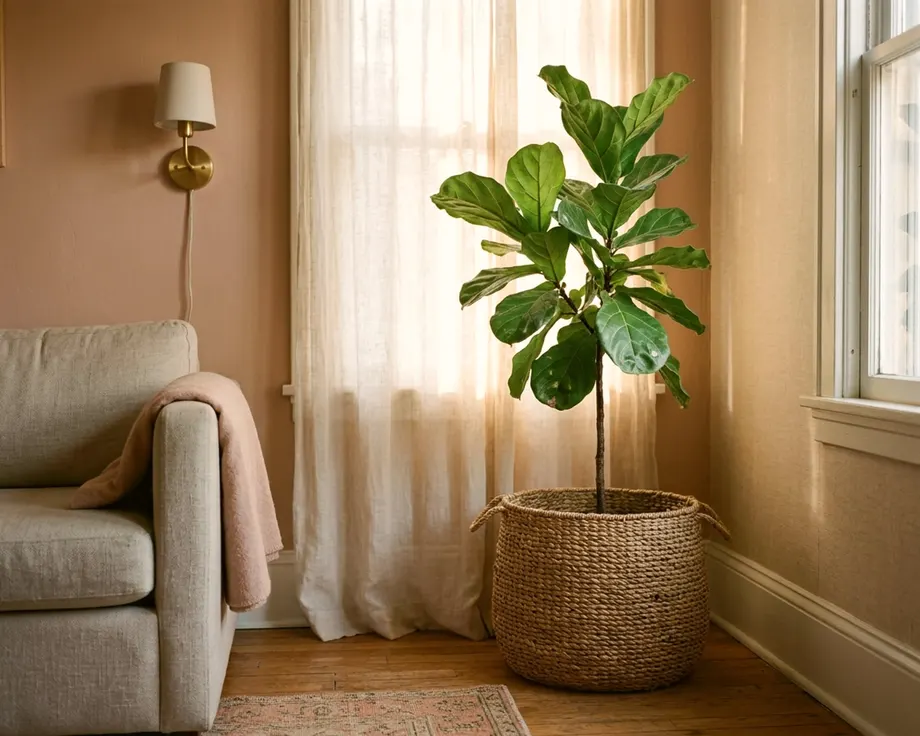
Fill the space with a large plant
A tall indoor tree softens the hard corners of a square room. A rubber plant or a fiddle leaf fig adds rich green color and wide organic shapes. The natural curves of the leaves break up the straight lines of the walls and baseboards.
Set the plant inside a heavy ceramic pot so it stays stable. You can raise a medium plant off the floor by setting its pot on a wooden stand. Raising the pot gives the plant extra presence and makes it look like deliberate furniture.
Pay attention to the sunlight. A bright corner suits a plant that likes strong light. A dark corner away from the windows needs a plant that tolerates low light, so check the plant label for its light needs.
Install a slim corner shelf
A narrow bookcase offers another way to use the vertical height in a bare corner. Slide a tall wooden shelf into the space to hold books and small decorative items. An open back shelf lets the wall color show through and keeps the corner feeling light.
Keep the heaviest items on the bottom shelves so the unit stays steadier, and follow the maker's instructions to anchor a tall shelf to the wall. Stack large art books or heavy wooden boxes near the floor. Place smaller paperbacks and delicate glass vases on the upper tiers at eye level.
Mix your books with empty space and simple ceramic objects. Stack a few books flat and stand others up between heavy bookends. Leave at least one shelf entirely bare. This approach creates home organization that looks good without making the corner feel crowded.
Angle a piece so the corner stops looking pushed away
Furniture shoved flat into a corner often looks like it is hiding from the rest of the room. Pushing a square cabinet directly into a square corner creates a rigid and heavy look. You can fix this easily by turning the piece on a diagonal axis.
Turn furniture on a diagonal
Angling a chair or a small cabinet brings it forward into the main living space. Turn your armchair so it faces the center of the coffee table. This makes the chair part of the main conversation circle instead of isolating it against the wall.
Follow these steps to angle a chair properly:
- Pull the piece completely out of the corner into the middle of the room.
- Turn the chair so the front legs point toward the center of the coffee table.
- Push the chair straight back until the rear corners almost touch the walls.
- Walk past the chair to ensure the front legs sit behind your main traffic line.
Pulling a piece out and turning it leaves a dark triangle of empty floor space behind it. You do not want that gap to look like a mistake. You need to fill the empty triangle with something that bridges the gap to the wall.
Fill the empty gap behind the piece
A tall floor lamp fits perfectly into the empty triangle behind an angled chair. The heavy base stays hidden behind the chair back. The tall pole rises up and uses the dead space while drawing the eye toward the ceiling.
A woven seagrass basket easily drops behind an angled chair. Use the hidden basket to store extra throw pillows or heavy winter blankets out of sight. The basket fills the gap and adds storage.
Angle a flat storage cabinet
Angling a small wooden chest or a short cabinet works just as well as angling a chair. Pull the cabinet out and turn it across the corner. This placement cuts off the deep corner and creates a new flat surface facing the room.
Set a trailing ivy plant on top of the angled cabinet. Let the green vines hang down over the sides. The soft leaves hide the sharp back corners of the cabinet. This simple trick blends the straight wooden edges into the flat painted walls.
Fix a corner that is dark with the right light
A dark corner makes the whole living room feel smaller. Heavy shadows in the corners trick the eye into thinking the walls are closing in. You can push those walls back visually by adding a dedicated light source.
Add a tall standing lamp
A tall floor lamp offers the simplest solution for a dark spot. Choose a lamp with a bright fabric shade to diffuse the light evenly across the walls. The soft glow eliminates the harsh shadows and makes the corner feel warm.
Avoid lamps with solid metal shades in a dark corner. A metal shade directs a hard beam of light straight down onto the floor. This creates a bright circle on the rug but leaves the upper walls and ceiling completely dark.
Hang a plug-in wall sconce
A plug-in wall sconce lights the space without taking up any floor room. Mount the brass sconce on the wall at eye level. Run the cord down the wall to the nearest outlet and keep it out of walkways.
A plug in sconce needs no new wiring. Check the maker's instructions for the right mounting hardware, and check your lease before drilling. You can hide the hanging cord by placing a tall potted plant directly in front of it.
Bounce light with a tall mirror
A mirror helps multiply whatever natural daylight the corner receives. Hang a tall rectangular mirror on one wall of the corner. Position it so it catches the reflection of a nearby window or a bright lamp.
The glass bounces light back into the space and makes the narrow spot feel deeper. A mirror with a thin metal frame keeps the look crisp and modern. You can give a room a makeover just by placing a large floor mirror in a dim corner, secured so it cannot fall.
Stop when the corner has two or three things, not six
A common decorating mistake is treating an empty corner like a vacant storage unit. Piling too many small items into a tight space creates instant visual chaos. You want the corner to look intentional, relaxed and fully finished.
Keep the item count low
Limit your living room corner decor to three distinct items maximum. A fabric armchair, a wooden side table and a brass reading lamp make a complete set. A tall potted plant and a woven storage basket work perfectly together.
Resist the urge to add more pieces once the main items are in place. You do not need a pile of magazines on the floor or boxes under the chair. Adding too many layers makes the corner look cluttered and messy.
Leave empty space around the pieces
Give every object in the corner room to breathe. Leave a small gap of empty air between the side table and the reading chair. Pull the tall plant slightly away from the baseboards so the leaves do not crush against the drywall.
Empty space around your items makes them look like important design choices. When furniture sits crammed together, it looks like it was pushed out of the way for a vacuum cleaner.
Balance the entire living room
Step back and look at the whole room from the main doorway. The newly decorated corner should balance the visual weight of the heavy sofa on the opposite side.
Take one small item away if the corner grabs too much attention. The corner should quietly support the main seating area.