- Home Style Daily
- Quick Refreshes
- Bedroom wall decor that works above the bed and beside it
Bedroom wall decor that works above the bed and beside it
Find practical bedroom wall decor ideas for the space above your bed and beside it. Learn simple spacing rules to hang art beautifully in an afternoon.
Ideas from Tavia Venable
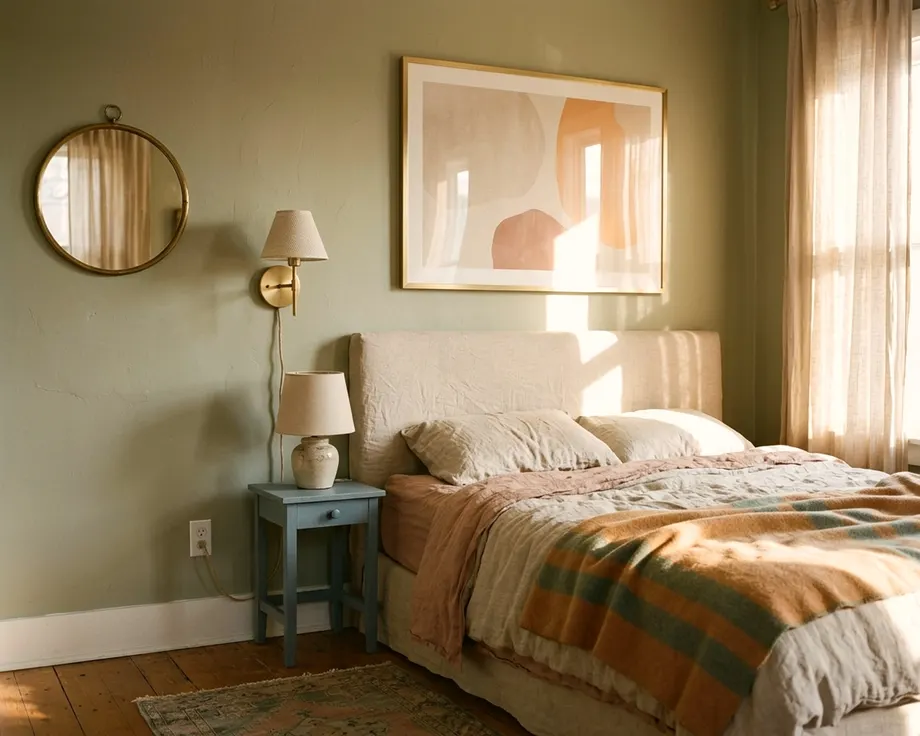
Find bedroom wall decor ideas that pull your room together in a single afternoon. You can ground the space around your bed with simple placements and clear spacing rules. A few right choices turn bare drywall into a finished room.
Hang art at the right height over the headboard
The bed is the heaviest object in the room, so the art above it must connect to the headboard.
A common mistake leaves frames floating too high near the ceiling. You want the art to belong to the bed. Keep the gap small.
A hand span is often enough space. The eye should see the headboard and the frame as a single shape.
Low ceilings require tight spacing. High ceilings might take a larger piece of art. The bottom gap stays exactly the same.
Always center your art on the mattress itself. A bed sometimes sits slightly off-center on a wall.
Finding the exact middle of the blank drywall often makes the hanging art look completely wrong. The mattress provides your true center line. Drop a piece of string from the ceiling to find the middle of the pillows.
Beds without headboards require a different approach. A simple metal mattress frame leaves a massive void on the wall. The art essentially becomes your headboard in this setup.
Hang a large canvas slightly lower to anchor your pillows. You want the fabric of your pillow shams to slightly overlap the bottom edge of the frame. This overlap ties the bed to the wall.
Test the height before you use a hammer. Cut folded newspaper to match the size of your frames. Tape the paper to the drywall.
Get into bed and sit up against the pillows. You want to lean back without hitting your head on the paper.
Move the paper until you find a safe spot. Step back and look at it from the hallway.
Choose one large piece or a loose group of three
Scale matters in a bedroom. A single small photograph gets lost above a mattress. You need something substantial to match the width of the furniture. A wide horizontal canvas works perfectly.
A large single piece calms the room. A horizontal landscape draws your eye from side to side across the space. It mimics the wide shape of the bed itself.
Abstract paintings create a quiet mood. Avoid busy cityscapes or loud colors in a sleeping space. You want your eyes to rest.
Grouping smaller pieces together costs much less than buying one giant custom canvas. A row of three matching frames creates excellent volume.
You can fill cheap picture frames that look custom with simple prints. Space them an equal distance apart. Two fingers of width between each frame looks natural.
Framed paper is not the only valid choice for a large space. A thick woven wall hanging adds deep texture to a cold room. Fabric wall decor can soften sound.
It softens the hard echoes in a room with bare wooden floors. A vintage quilt hung from a wooden rod brings instant history to an apartment.
You can also stagger your frames. A loose collection takes more planning. Keep the bottom edges straight across the whole group.
This grounds the collection against the headboard. Let the top edges vary in height.
Mix vertical and horizontal frames together. Keep the frame colors similar so the wall stays restful.
Use a mirror or a wall shelf for light and depth
Art is not your only option. Mirrors bounce morning daylight around a dark room. A round mirror softens the hard wooden corners of a bed frame. A wide rectangular mirror opens up a cramped space.
Pay attention to what the glass reflects. Position your mirror to catch a bright window. Try to avoid reflecting an open closet door. You want to see something pleasant when you wake up.
Consider a picture ledge instead of traditional hanging. A shallow wall shelf lets you change your mind easily.
You screw one long shelf directly into the wall. You can then lean your frames against the drywall. Layering feels very relaxed on a ledge.
Paint a wooden wall shelf the exact same color as your drywall. The shelf disappears entirely. The frames seem to rest on a tiny ledge of air.
This trick keeps a small bedroom looking neat. Leave the wood bare if you want a rustic cabin feel.
Place a tall frame near the middle. Overlap a smaller frame right in front of it. Add home accents that add warmth like a heavy ceramic bowl.
A heavy bowl sits nicely on a deep shelf and catches your rings before sleep. Drape a string of wooden beads over the corner of the largest frame. Add a small trailing plant to soften the straight lines.
Shelves over a bed need solid anchoring. A heavy shelf should be mounted into wall studs or with anchors rated for its load, so check the hardware label.
Drywall alone may not hold a loaded shelf, and a fall would land on your pillows. Find the studs behind the wall and drive long screws into them, or use anchors rated for the load. If you are unsure, ask a handy friend or a licensed pro.
Cover the empty wall beside the bed without crowding the nightstand
The space above a nightstand feels quite bare. It also gets crowded very easily. A bedside table holds a heavy reading lamp and a glass of water. You need wall decor that stays completely out of the way.
Wall sconces solve two problems at once. They add soft reading light and fill the empty vertical space.
Plug-in sconces skip the hardwiring entirely. You mount the base to the wall and drop the cord behind your nightstand. This frees up the entire table surface.
If you prefer keeping your table lamp, hang art directly above it. Stack two small square frames vertically. The vertical line draws your eye upward. It balances the flat horizontal line of the mattress.
Keep these side frames relatively narrow. Wide frames beside a bed feel cramped. You do not want to bump your shoulder on a sharp frame when reaching for an alarm.
Hanging a small ceramic planter from a ceiling hook also works well. A trailing vine drops soft green leaves down toward the table. It takes up zero surface space.
Some bedrooms have windows pushed right up against the nightstands. You barely have any drywall left to cover.
Hang a simple vertical mirror in that tight strip of space. It pulls the window light deeper into the dark corners. Do not force wide frames into narrow gaps.
Match the decor on both sides for a traditional look. Mismatch them for a relaxed bedroom feel. A sconce on the left and a stack of small paintings on the right brings character to the room.
Hang things so they stay put and the wall stays fine
You want your frames to stay flat against the drywall. Crooked art makes a whole room look messy. Hanging things properly keeps them level and secure.
Renters have specific property rules to follow. A landlord wants the apartment walls intact to return your security deposit. You can still hang beautiful things safely.
Adhesive strips handle small wooden frames nicely. They are made to peel off when you move out, but check the package for weight limits and wall types. Read the package instructions carefully.
Press the strip hard against the wall. Wait as long as the package says before hanging any weight on it.
Heavy mirrors require real metal hardware. Small nails easily tear through soft drywall. Use a wall anchor rated for the weight of heavy pieces, and check the label.
You drill a hole and tap the plastic anchor inside. The anchor expands behind the drywall and grips it tight. The metal screw goes straight into the anchor.
Picture wire behaves differently than solid metal hangers. Frames with a single metal sawtooth bracket catch a nail instantly.
Heavy wired frames need two separate hooks on the wall to stay level. One single hook lets a wired frame swing endlessly like a pendulum. Two hooks spread the heavy load across the drywall.
You can hang a frame exactly where you want it by following a reliable process:
- Mark the top center edge of your frame on the wall with a pencil.
- Measure the distance from the top of the frame down to the hanging wire.
- Measure that exact distance down from your wall mark and make a small cross.
- Drive your nail or screw directly through the center of that cross.
- Rest a small level on top of the frame and adjust it until the bubble sits in the middle.
Stick small felt pads on the bottom back corners of every frame. The pads stop the wood from scratching your fresh paint. They also stop the art from shifting when heavy doors close nearby.
You can patch small nail holes easily before you move out. Push a tiny drop of fresh spackle into the hole with your thumb. Wipe the drywall perfectly flat with a damp sponge. A dot of leftover paint usually hides the patch.
Step back and fix what looks off
You finish hanging everything, but the job continues. Leave the bedroom and walk back in slowly. Notice exactly where your eye goes first. You can always adjust a layout.
Check the glass for bad glare. A bedroom needs soft and calm lighting. A glossy print opposite a bright window might just look like a white block of glare.
Swap it for matte glass if needed. You can also move the frame to a shaded wall.
Look carefully at the visual weight across the room. The left side of the room might hold a massive wooden dresser and a dark painting. The right side will feel empty in comparison.
Balance dark colors with other dark colors across the space. You might need to style a bedroom dresser with lighter objects to fix the balance.
Adjust the spacing if a group feels scattered. Frames spread too far apart look like they are floating away. Move them closer together. They should read as one solid family of shapes.
You have to live in the space to know if a layout truly works.
Sit on the edge of the mattress. Read a book under your new wall sconce. Lie down flat and look at the opposite wall.
Take your time with these final visual tweaks. Small adjustments change how the room feels when you go to sleep.