- Home Style Daily
- Rental Friendly
- Sliding door curtains a renter can hang without drilling
Sliding door curtains a renter can hang without drilling
Find renter-friendly sliding door curtain ideas that go up without a drill and come down clean to leave your patio doors totally usable and free of damage.
Ideas from Tavia Venable
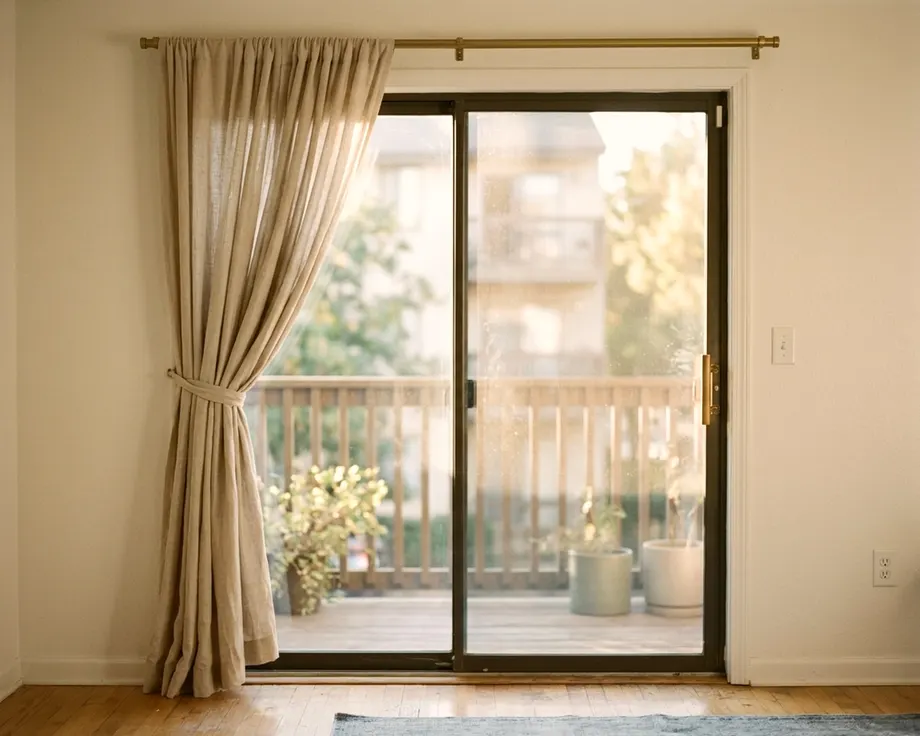
Renters skip patio window treatments because the glass is large and hard to dress without a drill. You can frame the view and gain privacy with adhesive hooks or a heavy tension rod instead. The right setup lets you slide the glass open without fighting a tangled mess of fabric.
Check how the door slides open
Patio doors dominate a room, so you must look at how the physical door operates before buying any fabric. One glass panel stays fixed in place. The other panel glides along a track. Your curtains need to gather on the stationary side.
If the fabric stacks on the moving side, you will constantly push the panels out of the way to go outside. This wears out the material and frustrates anyone trying to use the door. Watch how traffic flows through your apartment and notice where you stand to pull the latch. Think about how you step over the threshold.
Patio handles stick out from the frame, and secondary security bars often rest in the bottom track. Fabric catches on all this hardware, so you want to direct the curtain bulk away from these moving parts. Look at the blank wall space surrounding your door frame. You need bare wall on the stationary side to hold the pushed back material.
Sometimes a radiator or a bookcase blocks the wall next to the door. You might need to adjust your layout to create space for the fabric to rest. Moving a chair a few inches away from the wall gives the textiles room to breathe.
Finding temporary apartment upgrades starts with observing your daily habits. Step outside and walk back inside a few times to pay attention to where your hands naturally fall. Your curtain setup must work with this natural path.
Choose the right rod mount for your walls
Your mounting hardware depends entirely on the architecture around the door. Some patio doors sit deep inside a recessed opening. The surrounding walls create an alcove. A tension rod rated for the weight of your curtains suits this setup.
You wedge the rod between the side walls. Twist the rod tight so the rubber ends grip the paint. The spring inside creates pressure to hold the heavy metal in place. Tension rods are quick to install and are meant to leave the drywall intact.
Many apartments feature doors mounted flush with the surrounding wall. A tension rod will not work here because there are no side walls to push against, so you need adhesive utility hooks instead. Buy the largest plastic utility hooks available at the hardware store. Check the package for the weight each hook holds and stay under it.
Wipe the wall with rubbing alcohol before sticking anything up. Dirt and invisible grease prevent the adhesive from bonding with the paint. Let the alcohol dry completely.
Press the adhesive strip firmly against the bare wall and push the plastic hook onto the strip. Place a hook on the left edge, a matching hook on the right edge and another hook exactly in the middle of the span. A long metal rod will sag under the weight of thick fabric. The middle hook supports the rod.
Follow the package directions for how long to wait before resting the rod on the hooks. The adhesive needs time to set, and rushing can bring the whole assembly down under the fabric weight.
Extend the rod to keep the glass clear
Curtains look best when they pull completely off the glass during the day. Gathered fabric takes up physical space. The bunched fabric is called the stackback.
Your rod needs to extend far past the door frame to hold this bunched material. Adhesive hooks allow you to mount the rod ends onto the blank drywall. You slide the curtains out onto this extended section so the glass stays completely clear. The sun pours in unhindered.
This wide placement tricks the eye. It makes the window feel massive and the ceiling feel taller. You avoid that cramped feeling common in small rentals.
If your room forces you to use a tension rod inside a recessed frame, you face a compromise. The panels will cover a section of the glass even when fully open. The stackback stays trapped inside the frame.
You can minimize this problem by choosing very thin fabric. Thin material gathers tightly and takes up less room on the rod. You will still lose some natural light, but you gain soft texture around the hard glass edges.
Keep the curtain rings loose so they slide easily. Metal rings glide over a metal rod much better than fabric loops. This simple detail makes pulling the panels back much smoother.
Match the fabric weight to your needs
Searching for sliding door curtain ideas usually starts with solving a specific problem. Sometimes the large glass pane turns the entire room freezing cold. A bare window acts like a giant block of ice in winter.
Heavy velvet panels can help cut the chill. Thick canvas or thermal backed cotton can also reduce drafts. These dense materials act as a blanket for your wall.
Heavy curtains require strong support. If you hang velvet, check each hook's weight limit and add hooks as the package allows. You can add extra cozy layers to your space when you need them.
Other times the glass simply lets neighbors see straight into your kitchen or living room. You just want privacy without blocking the afternoon sun. Sheer linen or light cotton obscures the view from the outside.
Light fabrics flow easily along the metal rod. They weigh very little and move gently in the breeze. A basic tension rod usually holds sheer panels. Standard adhesive hooks suit light fabric too, as long as you stay under their weight limit.
Wash the fabric and dry it before you hang anything. Store-bought panels may shrink in the wash, so check the care label. Wash them first so the final hem stays exactly where you want it. Iron the panels while they remain slightly damp to remove deep packaging wrinkles.
Keep the hem away from the track and handle
Sliding doors run on a metal bottom track. This track collects dust, outside dirt and heavy grease. Curtains that drag on the floor will sweep this track clean. The fabric will turn black with grime and tear against the metal edges.

Pin the hem so it hovers slightly above the floor. You want a small gap between the textile and the carpet or hardwood. This floating hem keeps the bottom edge pristine.
If the panels are too long, fold the excess material under and secure it. You do not need a sewing machine to fix the length. Iron on hemming tape melts with the heat of an iron to bond the folded fabric together. Fabric glue also works perfectly for a quick hem.
The door latch presents another snagging point. You must keep the moving material away from the lock. Install a small adhesive hook on the wall next to the stationary glass panel.
Loop a fabric tieback around the curtain and hook it to the wall. This simple addition holds the bulk of the material safely away from the heavy traffic zone. It keeps the fabric clean and prevents accidental rips.
Pets often sleep against cool patio glass. A pinned hem and a tied back panel stay much cleaner when a dog brushes past them all day.
Take the setup down clean when you move out
Many leases ask renters to leave the walls as they found them, so check yours. A clean removal helps you get your deposit back from the landlord.
Tension rods usually leave no marks behind. You just twist the metal shaft loose, compress the spring and take the rod away. Wipe the door frame with a damp cloth to remove any dust rings left by the rubber ends. The frame will look exactly as it did on move in day.
Adhesive strips require a little more care and patience. Pulling the plastic tab straight off the wall can tear the top layer of drywall paper. Check the package for the maker's removal directions first.
Hold the hook gently with one hand while pulling the adhesive tab slowly straight down against the wall with your other hand. Stretch the strip downward until it releases its grip. Never pull outward toward yourself. Stretching it flat against the wall usually releases the strip without peeling the paint.
Wipe the area with a wet rag to remove any lingering sticky spots. Inspect the wall from a few different angles to ensure no residue remains.
Doing your own careful rental walkthrough gives you peace of mind. Your landlord will see a perfectly bare frame. You walk away with your favorite curtains and a better chance at your full deposit.